
Weatherproofing your home can have enormous benefits, from saving money on utility bills to protecting your home from
some of the harshest storm impacts common to your area. However, many individuals may not know where to start when
the time comes to weatherproof their homes.
Here are a few great places to start and common questions about weatherproofing your home.
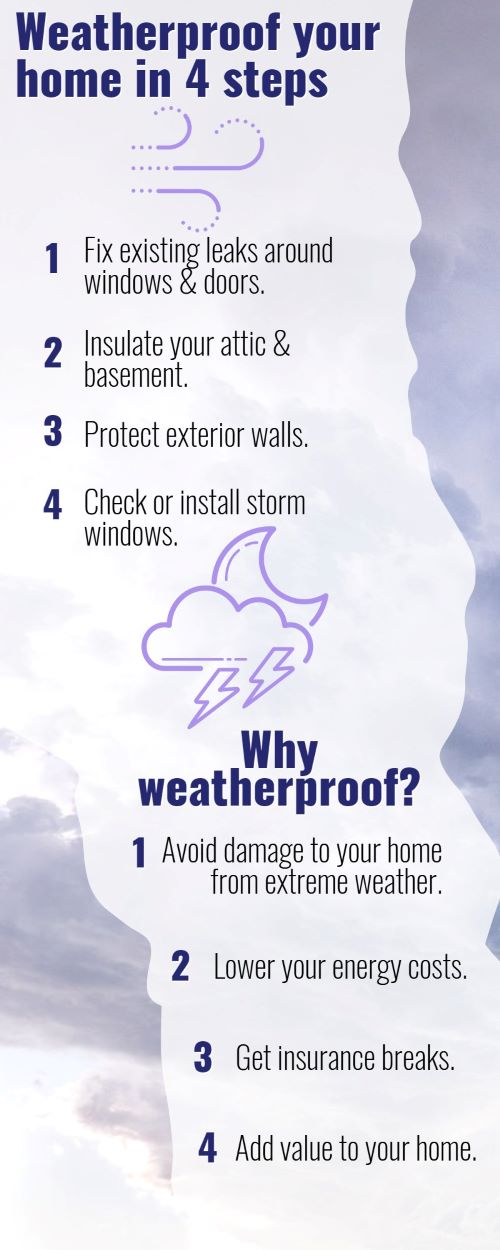
1. Fix leaks around windows & doors
When it comes to weatherproofing homes, the best places to start are your doors and windows. These areas are great,
covert money drains due to leaking cold air from the interior of the home during hot weather or letting the cold
winter air slip in during the colder months, both boosting your utility costs.
Adding the appropriate seals to your windows and doors can help retain the indoor temperatures while keeping the
outdoor elements outside.
2. Insulate
Proper weatherproofing also means monitoring your insulation. If you’re in a particularly weather-intense area, it
may be worth it to invest in heft insulation that keeps the effects of the weather from leaking into your home.
Likewise, insulation can help protect the interior of your home’s walls from unforeseen damage, like excessive
changes in humidity.
Depending on your region, adding extra layers of attic or basement insulation may also help keep your home in top
shape during the harsh months or when temperatures tend to fluctuate to extremes.
3. Weatherproof your exterior walls
Weatherproofing your home’s exterior is usually more preventative. This may include trimming foliage away from the
home to prevent damage should something happen to a tree or large overhanging plant.
Inspect your home’s exterior walls for any damage, such as pest damage or warped panels. If you find any, it’s
imperative to treat the issue as soon as possible. Likewise, check outer door and window frames to ensure they’re
installed correctly and don’t have any apparent leaks.
4. Make sure storm windows are installed correctly
If you have storm windows, make sure they’re installed correctly. Any window installed incorrectly could have adverse
effects. However, a storm window installed incorrectly could also damage your home due to the more robust materials
used.
By ensuring your windows are installed correctly, you not only ensure they remain energy-efficient, but also add an
extra layer of protection to your home.
5. What are the benefits of weatherproofing your home?
Weatherproofing your home is great for adding an extra layer of protection during stormy weather. It’s also great for
decreasing energy bills.
6. Are there insurance breaks for weatherproofing your home?
Yes. Some insurance companies will offer insurance breaks for weatherproofing homes. Check your policy or give your
provider a call if you’re curious.
7. Does weatherproofing provide financial perks?
Absolutely! Not only can it reduce the damage done to your home, but it can add value to your home while lowering
your energy bills.
Regardless of your home, adding an extra level of weatherproofing is a great way to ensure you protect your
investment while increasing your savings.